
Individualized Doesn’t Have to Mean Isolated: Why Neurodivergent Kids Need to Learn With Other Kids
9. Prioritize Your Own Well-Being
Caring for a child with autism requires patience and energy. To be the best advocate for your child, make sure to:
- Take breaks when needed
- Lean on your support network
- Seek therapy or counseling if needed
Your well-being matters too.
Final Thoughts
7. Stick to Predictable Routines
Change and unpredictability can be overwhelming. A consistent daily rhythm gives kids a sense of safety.
- Use visual schedules
- Give warnings before transitions (“5 more minutes”)
- Keep mealtimes and bedtimes consistent
When kids know what to expect, their bodies and minds feel calmer.
Conclusion
If you’re parenting a child with autism, ADHD, or severe behaviors, know this: You are not alone, and your child is not broken.
Start today with one small step, observe, pause, and connect. Over time, these small moments of understanding will transform your home into a place of calm and connection.
You’ve got this. And if you ever need guidance, there are resources and communities ready to help.
You can join our Parenting Autism Circle HERE
Conclusion
Calming strategies aren’t quick fixes. They’re tools your child will learn over time, with practice and patience. Some days will be easier than others, but every time you use these strategies, you’re teaching your child skills they can carry into the future.
You don’t have to yell, punish, or feel helpless. You can lead with calm, and your child can learn to do the same.
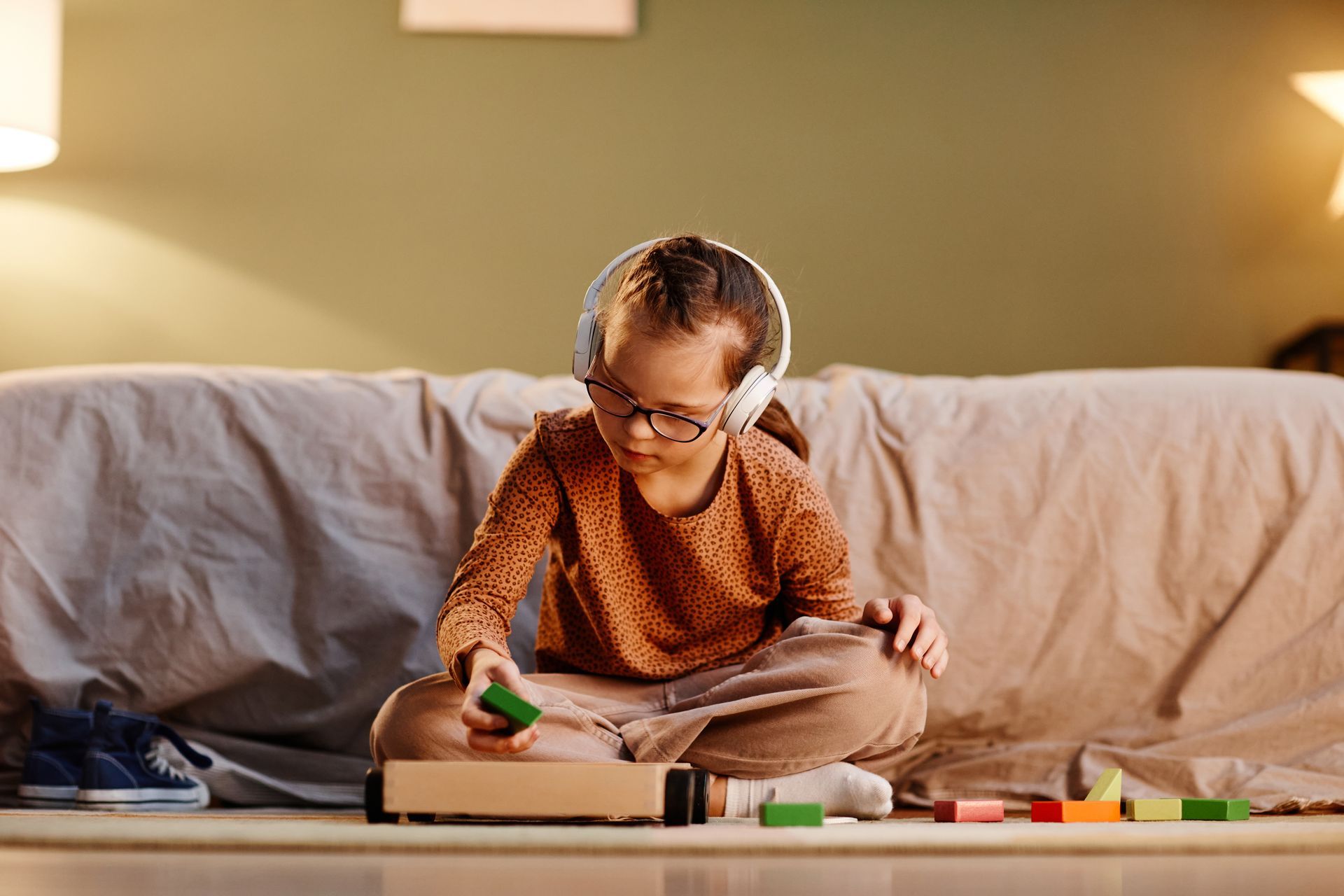
When we talk about supporting neurodivergent children, we talk a lot about individualization.
And we should.
One child may need more movement. Another needs extra processing time. One learns best visually. Another needs frequent breaks, smaller steps, different communication supports, or more time before responding.
But somewhere along the way, I started wondering:
Have we accidentally confused individualized learning with isolated learning?
Children don't grow up one-on-one.
They grow up around other humans.
And other humans are wonderfully unpredictable.
Some things can't be learned one-on-one
I can teach a child how to wait during a 1:1 session.
But waiting becomes very different when another child gets the toy first.
I can teach someone how to ask for a turn.
But that skill becomes real when there are three children who want the same thing.
We can practice flexibility at a table.
But real flexibility happens when someone changes the rules of the game, another child has a different idea, the room gets a little louder, or the activity doesn't go exactly as expected.
That's the difference between knowing a skill and living a skill.
And I think our kids need opportunities for both.
Other children are part of the learning environment
There's another kind of learning happening in groups that adults can't completely recreate.
Children watch children.
They notice how another child builds something.
They hear another child ask a question they hadn't thought to ask.
They watch someone solve a problem differently.
They discover a new game because another child loves it.
They see someone make a mistake, recover, and try again.
Sometimes a child doesn't learn because an adult taught them something directly.
Sometimes another child simply makes something possible to notice.
That matters.
A good learning environment shouldn't only ask, “What can I teach this child?”
It should also ask:
“What might this child discover because of who and what we place around them?”
Individualized learning and group learning are not opposites
This is one of the ideas behind The Neurodivergent Nook.
I don't want to choose between individualized support and learning in a community.
I want both.
A child should be able to move differently, communicate differently, need more time, receive individualized instruction, or take a break when necessary.
But I also want that child to have other children nearby.
I want conversations happening.
Ideas being exchanged.
Small problems appearing naturally.
Different personalities.
Shared projects.
Moments of waiting, negotiating, laughing, disagreeing, helping, watching, copying, creating, and trying something new.
Not because every interaction needs to become a “therapy opportunity.”
Because that's what childhood actually looks like.
The environment is teaching, too
As a behavior analyst, I've spent years thinking about what skills a child needs to learn.
But the longer I do this work, the more interested I've become in another question:
What conditions help this particular child learn?
The environment isn't just the room where learning happens.
The environment is part of the learning.
The people in it matter.
The noise matters.
The materials matter.
The expectations matter.
The freedom to explore matters.
The opportunity to watch someone else matters.
Even the unexpected moments matter.
We can't prepare children for a complex world by removing every bit of complexity from their learning environment.
But we can make that complexity manageable.
That is where I believe small-group learning can be incredibly powerful.
Enough support to feel safe enough to learn.
Enough individuality to honor how each child learns.
Enough other humans to make the learning real.
That is why I created The Neurodivergent Nook
The idea didn't start because I wanted to open another program.
It came from watching children.
Again and again, I saw children who needed something more individualized than a traditional learning environment could easily provide, but something more natural and connected than spending most of their learning time one-on-one with an adult.
They needed individualized learning without isolated learning.
That's the space I want the Neurodivergent Nook to explore.
A small learning micropod where children can receive support based on how they learn while still being part of a living, changing little community.
Ultimately, I don't want our kids to become really good at learning from adults in carefully controlled situations.
I want them to become curious about the world around them.
To notice other people.
To discover new interests.
To handle differences.
To contribute their own ideas.
To learn from someone else, and sometimes be the child someone else learns from.
Because perhaps one of the most important things a child can discover in a learning environment is:
“I can learn in my own way without having to learn alone.”